What roof treatment actually is
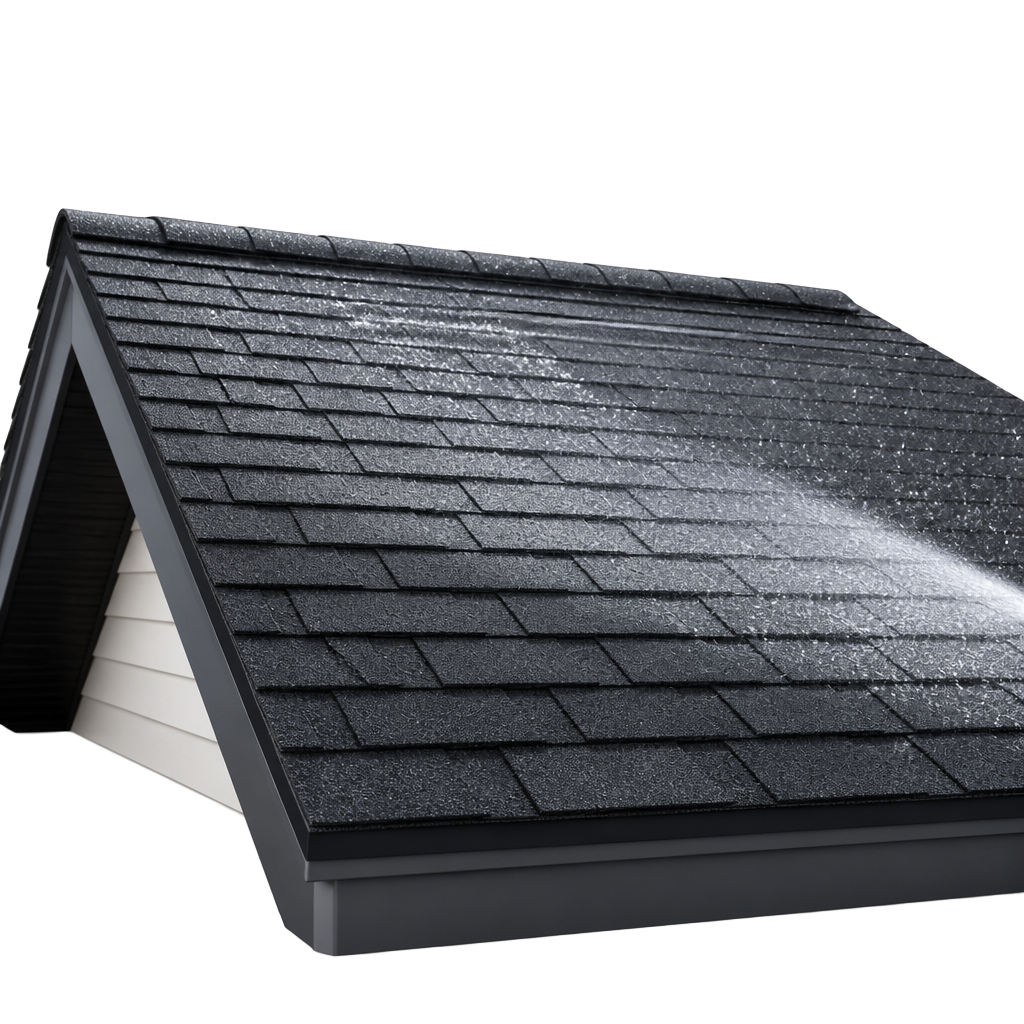
A chemistry job. A diluted sodium hypochlorite solution mixed with a low residue surfactant is applied at low pressure across the affected surface. The biocide penetrates the cell walls of algae and lichen, killing the organism at the root rather than blasting off the visible portion. The dead material rinses away with rain over the following weeks, or is gently rinsed during the visit. No high pressure wand. No sandblasting of granules. That is the entire method.
The organism: gloeocapsa magma
Gloeocapsa magma is a cyanobacterium, photosynthetic, airborne, and continent wide. It produces a dark pigmented sheath to protect itself from UV, which is why infested roofs turn progressively darker. Left untreated it retains moisture against your shingle surface, accelerates granule loss, and feeds on the limestone filler in asphalt shingles. In Miami it is visible on most roofs within four to eight years of installation and spreads fastest on north facing and shaded slopes where morning dew lingers.
Why Miami roofs streak where they do
North facing slopes in Miami dry last. Morning shade combined with year-round humidity often above 70 percent creates the damp dwell time gloeocapsa magma needs. West slopes are the second starting point because afternoon wet-season thunderstorm runoff keeps surfaces wet through the evening. Under heavy tree canopy across Miami, spore load is higher regardless of orientation.
ARMA guidelines and what they require
The Asphalt Roofing Manufacturers Association's technical bulletin on cleaning asphalt shingles is explicit: low pressure application of a sodium hypochlorite and water solution. ARMA specifically states that pressure washing is not recommended and that improper cleaning can void manufacturer warranties. Any contractor who shows up with a pressure wand to clean asphalt shingles is working against the standard of the organization that represents the manufacturers of those shingles.
Shingle warranty language, GAF and Owens Corning
Both brands, the two dominant shingles on Miami roofs, address cleaning in their warranty documents. GAF's Timberline HDZ warranty and Owens Corning's Duration warranty both exclude damage from improper cleaning including high pressure washing, and both acknowledge that low pressure chemical washing does not void coverage. The cliff is pressure washing, which mechanically removes granules, and granule loss is the primary indicator adjusters use at claim time. Pressure wash your roof before a hurricane wind claim and you have handed the adjuster a reason to dispute coverage that has nothing to do with the storm.
The hurricane season reality
Miami sits in one of the most active hurricane and wind-damage corridors in the country. Because of this a large share of roofs in Miami were replaced within the last five to ten years, often with Class 4 impact rated Timberline HDZ or Duration, and they are already accumulating gloeocapsa magma. A treated roof sheds water more evenly, retains granules longer, and goes into the next hurricane season in better structural condition than one carrying active biological growth.
Tile and metal roof differences
Concrete and clay tile use the same chemistry with different dwell times. Lichen on tile bonds mechanically and may need a second application before the holdfast releases cleanly. Tile can be rinsed at moderate PSI because there are no granules to lose. Standing seam and corrugated metal grow algae similarly and respond faster to SH treatment, but are rinsed rather than left to weather because oxidation staining can set into the coating if left wet. There is no single protocol across substrates.
Plant and pet protection
Sodium hypochlorite at roof washing concentration harms turf, ornamentals and pets if contact is unmanaged. Every job: pre-wet all foundation plantings, lawn and hardscape within the runoff path; tarp or move container plants; keep pets and people off the property until rinse is complete. We do not treat in high wind conditions that carry overspray beyond the target. Downspout outlets and adjacent beds are flushed with clean water after. Not optional. Every visit.
What actually drives the price
Square footage of the roof plane, pitch, substrate (asphalt, tile, metal), algae severity, and access complexity are the five variables in every quote. A one-story Miami asphalt roof and a three-story Miami tile roof under canopy are different jobs at different prices. The written quote you get back itemises each driver so you can see exactly what you are paying for and why.
What one visit looks like
Photograph the roof condition before work begins, ridge line, each slope, algae patterns, existing granule loss or mechanical damage. Apply by low pressure pump, ridge to eave. Dwell time depends on growth density and temperature. Light rinse for most asphalt jobs, heavier for tile and metal. Post application photos. You get both sets before we leave. Results visible immediately on light to moderate growth. Heavy long standing streaks lighten further over four to six weeks as dead material weathers off with rain.
Re-treatment cadence in Miami
A properly applied soft wash treatment suppresses regrowth for two to four years in Miami's year-round heat and humidity. Heavy tree canopy and north facing slopes trend short. Open south facing roofs hold longer. Zinc or copper ridge strips have mixed real world results here and are not a substitute for a full treatment, but they are not harmful either. Schedule an inspection at two years and retreat when streaking becomes visible, not after it has been active for multiple seasons.