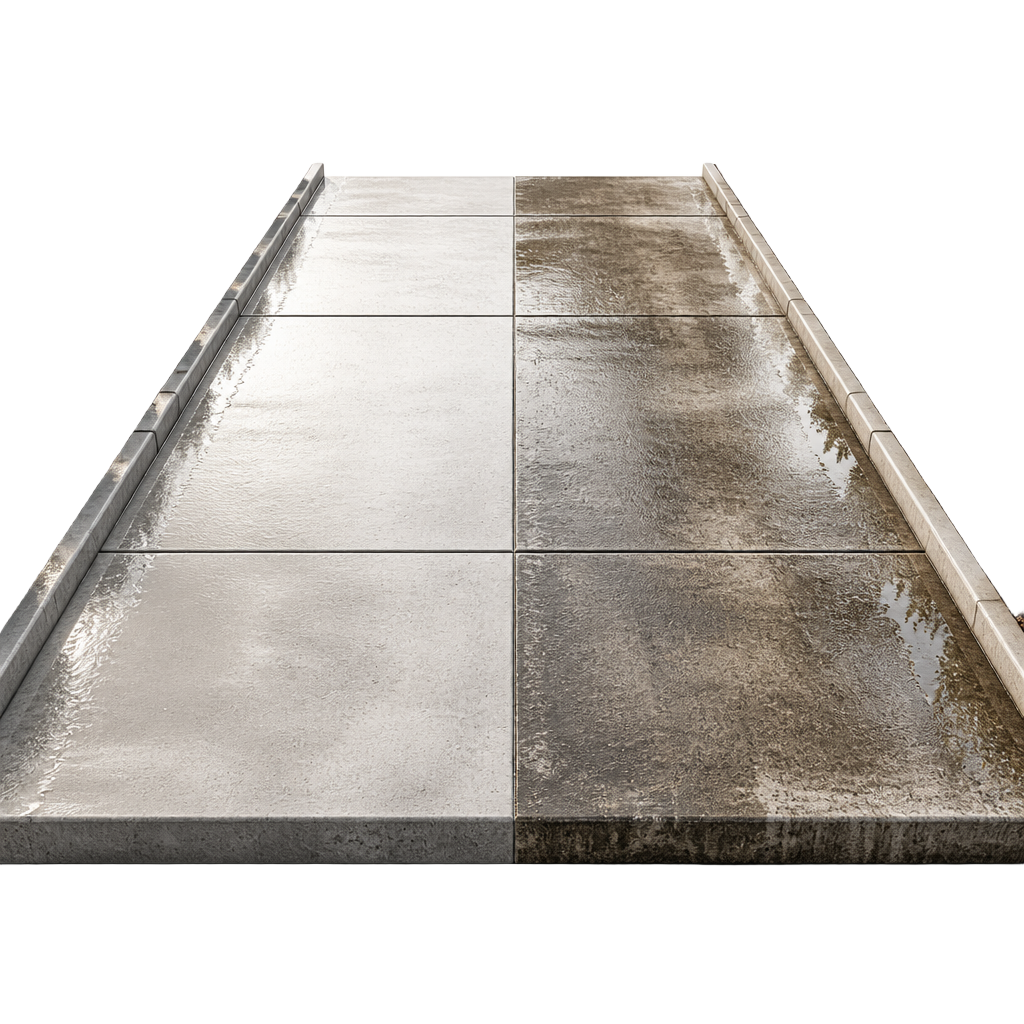
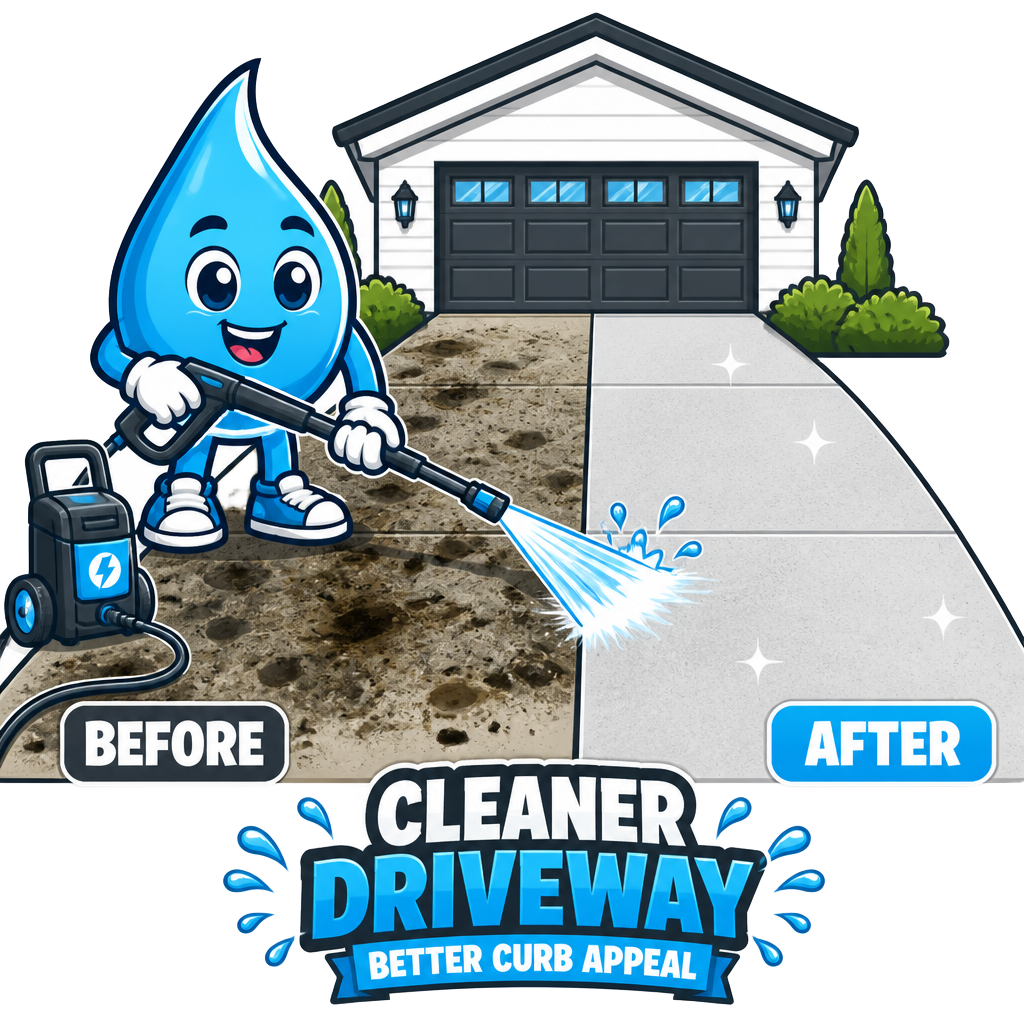
Why Miami driveways get so dirty so fast
Miami sits on limestone-rich, sandy soil. Every rain kicks fine dust onto the slab. Sprinkler systems fed by municipal water or private wells deposit iron minerals in arc patterns across the concrete face. Mature live oaks drop tannin loaded leaves that, left wet, etch gray-black stains into porous concrete. Add daily tire traffic, the occasional oil drip, and UV breakdown of the surface itself, and you have a stain profile that requires actual chemistry, not just water pressure.
Surface cleaner vs wand only, why it matters
A wand concentrates pressure in a narrow line. Move too fast and the surface stays dirty. Move too slow and you etch the concrete. Either way you leave visible stripe patterns that are obvious in raking light. A surface cleaner is a flat spinning bar housed inside a shroud, it covers a consistent 18 to 20 inch path, holds uniform pressure across the full width, and leaves an even clean with no tiger stripes. Not optional equipment. Baseline.
Pre-treatment is where the real work happens
Pressure alone does not break the bond between organic stains and concrete. Oil requires a degreaser applied with dwell time before the surface cleaner runs. Mildew and algae, common on north facing or heavily shaded drives, need an algaecide pre-soak. Tannin from oak leaves responds to an oxidizing agent. Skipping pre-treatment and running the surface cleaner anyway produces a lighter version of the same stain. We identify what is on the surface before we put water on it.
Iron rust from sprinklers and well water
One of the most common Miami complaints and one of the most misunderstood. The orange to brown arc stains you see at the edge of the driveway or running down from expansion joints are iron deposits left behind when sprinkler water evaporates. Standard pressure washing does not touch them. Iron requires an acid based or oxalic acid treatment applied directly, allowed to react, then rinsed. If your property has a well or older irrigation system, iron staining will return over time. That is a water chemistry issue, not a cleaning failure.
Post-treatment brightener rinse
After the surface cleaner pass, the concrete is clean but often looks flat or slightly gray from cleaning agents used in pre-treatment. A neutralizing brightener rinse, typically a diluted acid wash, restores pH balance, lifts residual detergent film, and produces the light even appearance that makes a cleaned driveway actually look cleaned. Without it, the result is technically clean but visually underwhelming.
Pavers in Miami
Brick and concrete pavers require a different approach. More porous than poured concrete and the polymeric sand in the joints can be displaced by high pressure directed straight down into the seams. We reduce pressure and angle accordingly. Pavers that have lost joint sand, which shows as gaps, wobble underfoot or ant intrusion, need re-sanding as a separate service after cleaning. We flag it during the job.
Stamped concrete, cleaning without damaging the pattern
Stamped concrete is sealed at installation and relies on that topcoat to protect color and texture. Aggressive pressure or wrong chemistry strips the sealer and exposes raw concrete underneath, which fades and stains faster. We use lower pressure on stamped surfaces, avoid acid based pre-treatments unless the sealer is already compromised, and recommend resealing after cleaning if the sealer is showing wear.
New-build concrete in Miami
The light gray and near white concrete common in new construction in Miami is unforgiving. Construction debris, tire marks from deliveries, fine silt tracked in during grading, and iron heavy water used for landscape establishment all show immediately against a pale slab. These drives often look dirty within the first year and owners assume it is normal wear. Most of it is removable. The key is addressing it before it has been ground in by years of traffic.
HOA driveway violations
Miami HOAs send violation notices for driveways showing visible mildew, oil staining or general discoloration. If you have received a notice, the standard cleaning process addresses the biological growth and surface staining that triggers most violations. Document the before and after and keep it on file. If the staining is structural, etching, spalling or permanent discoloration from improper prior cleaning, no amount of washing corrects it.
Bundle with a house wash
Driveway cleaning and house washing scheduled together share setup, water source and crew time. The runoff from a house wash can deposit detergent on a driveway that was just cleaned, doing both in the correct order on the same visit avoids that problem. One scheduling window instead of two.